A doormat that is the wrong size is the most common and most avoidable mistake in an entryway. Too small and it looks like a postage stamp under a full-height door while letting grit track straight past it; too large and it fouls the door swing or overhangs the step. The fix is not taste, it is measurement. Spend five minutes with a tape measure before you order and the size question answers itself.
This walkthrough goes in the order you should actually work: measure the opening, apply the width rule, set the depth for how people wipe their feet, and only then check the two clearances that quietly ruin otherwise perfect orders. Custom mats are made to the size you specify, so the responsibility for getting it right sits with the measurement, not the maker.
Start with the door, not the mat
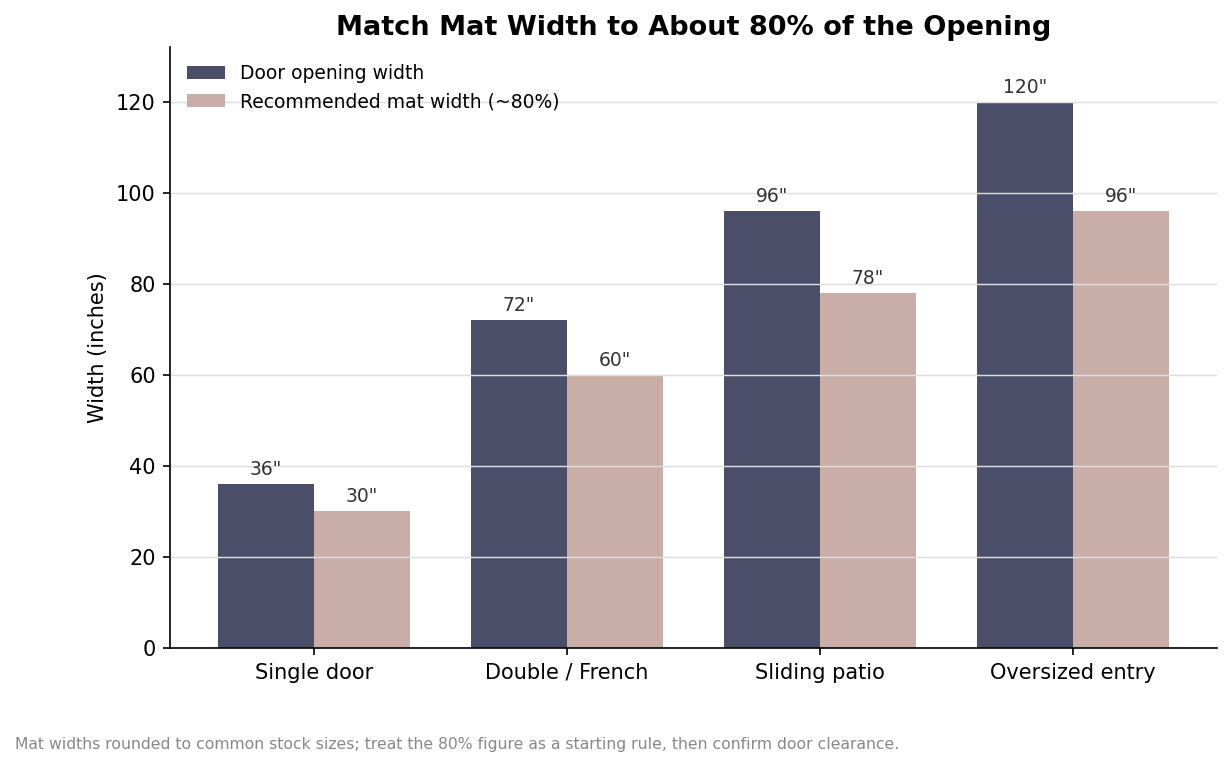
Measure the opening first. Stand at the threshold and measure the clear width of the doorway, then the width of the door slab itself, and note whether the door swings in or out. A standard single exterior door is about 36 inches wide. A double or French door pair is usually somewhere between 60 and 72 inches across the two slabs, and a sliding patio unit commonly runs 72 inches and up. Those opening numbers are the anchor for everything that follows; the mat is sized to them, not to the doorway you wish you had.
Write down the swing direction while you are there. An out-swinging storm or screen door sweeps across the exact space the mat wants to occupy, and that single fact often decides whether you can use a thick coir mat or need a low-profile one. It is the detail people skip and then discover on delivery day.
The width rule, and when to break it
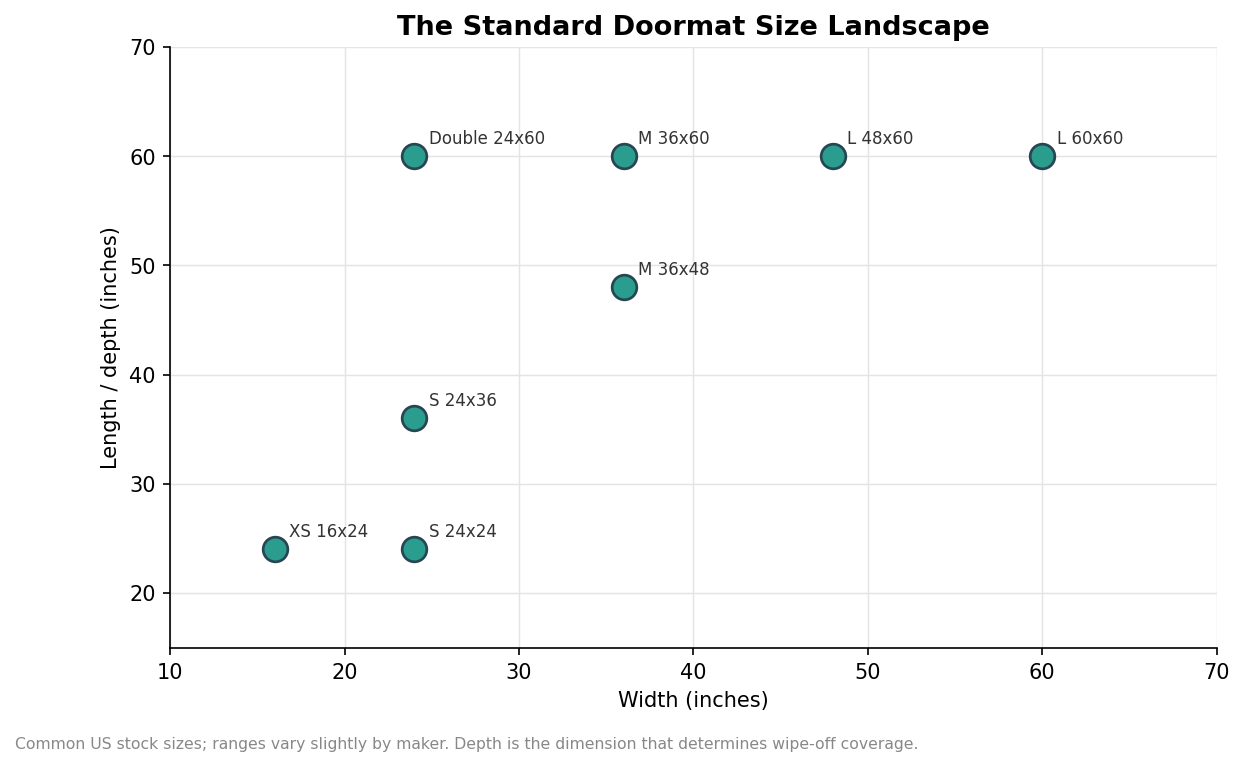
The workhorse guideline is that a mat should span roughly 80 to 90 percent of the door’s width. It should read as clearly belonging to the door, stopping a little short of the frame on each side rather than either hiding under the slab or spilling past the trim. For a 36-inch single door that lands you at a mat around 30 inches wide, which is why the 24-by-36-inch size is the perennial default for single entrances and the 18-by-30-inch mat is the compact standard for tighter stoops.
Scale the same rule up and the sizes fall out cleanly. A double or French entrance wants a mat in the neighborhood of 60 inches wide, which is why makers list an extra-large mat of at least 24 by 60 inches specifically for double doors. A wide slider or an oversized custom entry pushes wider still. The 80 percent figure is a starting point rather than a law, though: a covered porch with room to spare can carry a mat that runs the full width of the doorway for a more grounded look, while a narrow landing may force you a little under the rule to keep the door clear.
Set the depth for how feet actually move
Width gets the attention, but depth, the front-to-back dimension, is what determines whether the mat does its job. A doormat only works if a person takes at least one full step on it, and ideally two, so both feet contact the surface before they reach the threshold. A shallow 18-inch mat gets one glancing step; a 30-to-36-inch depth gets the two strides that actually pull grit and moisture off a shoe. This is why the standard sizes deepen as they widen, and why a wide, shallow runner can look right and still underperform a smaller mat with more depth.
For a high-traffic or wet-climate entrance, favor more depth even at the cost of a slightly less tidy proportion. The mat is a filter, and a filter needs surface area in the direction of travel. If you are choosing between a 24-by-36 and a 36-by-48 for a busy family door, the deeper mat will keep more dirt out of the house, full stop.
Check the two clearances people forget
Two vertical measurements decide whether your correctly-sized mat will actually sit flat and let the door open. The first is the gap under the door. Measure from the finished floor to the bottom of the door slab; a thick coir or rubber-backed mat can easily stand a half-inch to three-quarters of an inch tall, and if that height exceeds your under-door gap, an in-swinging door will jam against it or drag. Where the gap is tight, specify a low-profile mat, often a quarter-inch or less, rather than a plush one.
The second is threshold and step geometry. If the mat sits on a landing at the top of a step, keep its front edge back from the nosing so no one catches a toe on an overhanging edge, and make sure a raised threshold strip does not hold one end of the mat up in a curl. These are indicative cautions rather than fixed numbers because every entry differs, but they are the failures that turn a well-measured mat into a trip hazard or a door that no longer closes.
Turning the measurements into an order
By this point the specification writes itself. You have an opening width, a mat width at about 80 to 90 percent of it, a depth chosen for one or two full strides, and an under-door clearance that caps how thick the mat can be. Translate those into the nearest standard size for the best value, or give the exact width and depth if you are ordering a custom mat and the standard grid does not fit your entry. Note the swing direction and the thickness limit on the order itself so nothing gets lost.
Do that and the mat arrives sized to the door rather than to a guess: wide enough to look deliberate, deep enough to catch what shoes carry in, and thin enough that the door still swings clean over it. Every other decision about a doormat, from material to lettering, is easier once the dimensions are right, and none of them can rescue a mat that is the wrong size for the door it guards.
Win Free Stuff
Enter below for a chance to win plus receive 10% off your first order.
🎉 You are in!
Check your email for your 10% off code. Good luck!